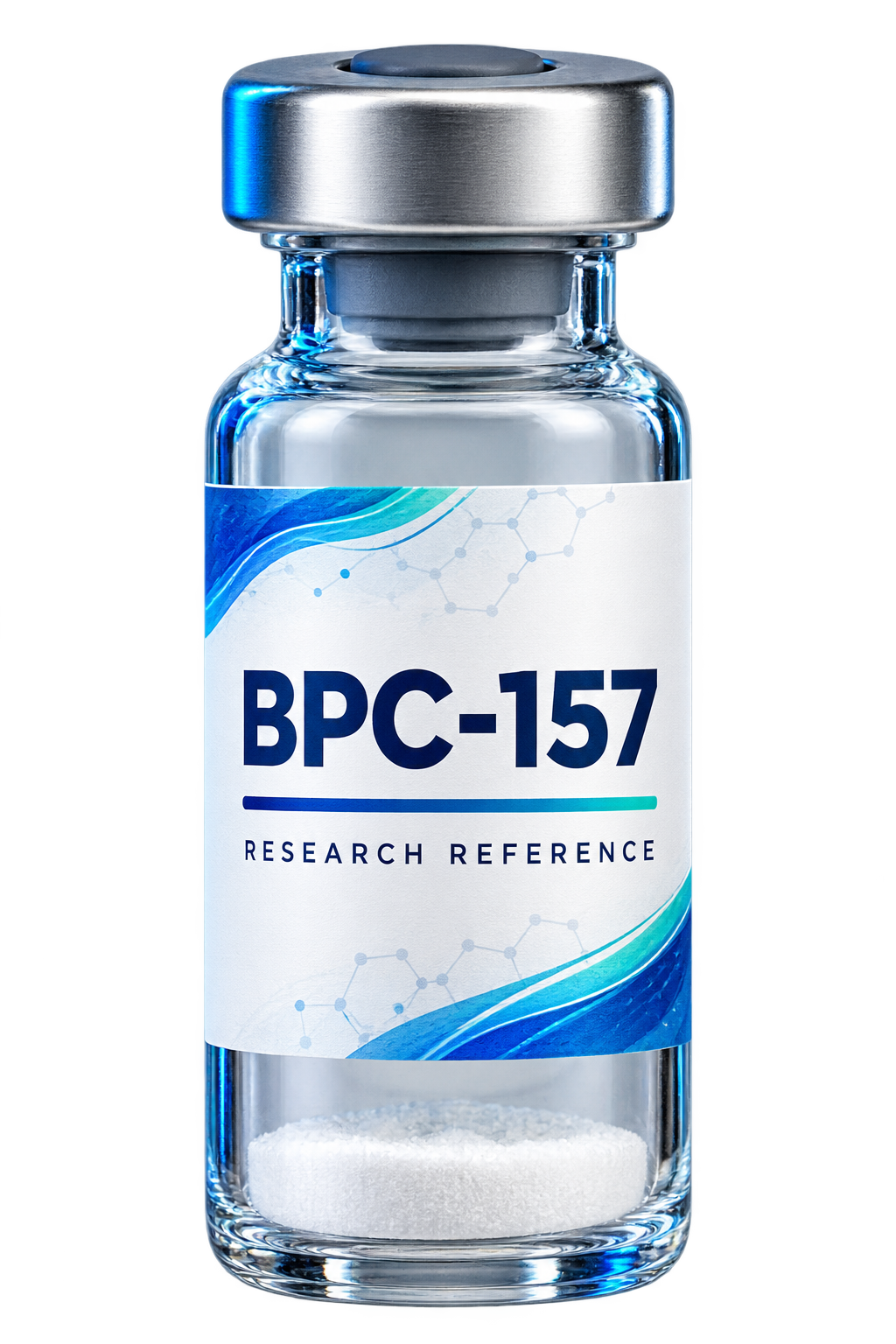
Plain-language summary: BPC-157 is an experimental peptide promoted online for many uses, but it is not an FDA-approved drug. Human evidence is extremely limited, and claims commonly made about it go beyond established clinical evidence.
What Is BPC-157?
BPC-157 is a synthetic peptide sequence associated with experimental research into tissue response and repair mechanisms. Much of the published work has involved animals or laboratory models rather than robust human clinical trials.
Regulatory and Sport Status
BPC-157 is not an FDA-approved drug. FDA reviewers have also discussed safety and evidence concerns surrounding proposed compounded BPC-157. In competitive sport, the World Anti-Doping Agency lists BPC-157 among prohibited non-approved substances.
What Does the Evidence Show?
Animal and laboratory findings can help generate hypotheses, but they cannot establish that a compound is safe or effective in people. BPC-157 lacks the large, well-controlled human trials needed to support the broad injury, gastrointestinal, and recovery claims often found in marketing.
BPC-157 Calculator and Concentration Math
The BPC-157 calculator performs generic concentration and unit-conversion math from a user-entered vial amount, BAC Water (Bacteriostatic Water) volume, and required target amount. It can display mg, mcg, mL, and the corresponding position on a 1 mL, 100-unit syringe scale. Inclusion is not an endorsement, and the calculator does not choose a dose.
BPC-157 Reconstitution and Vial Differences
A universal BPC-157 mixing or reconstitution chart can hide differences in vial amount, added liquid, target unit, and syringe scale. The calculator keeps those values visible so the arithmetic can be checked. It cannot confirm vial contents, purity, sterility, stability, authenticity, or safe handling.
BPC-157 and TB-500
BPC-157 and TB-500 are separate research compounds with different identities and evidence limitations. Search interest in combining their names does not establish that a mixture is standardized, clinically proven, or safe. Each labeled amount must be treated as its own input rather than inferred from the other compound.
Evidence and Safety Limits
“Research use only” is not a quality guarantee and does not establish safety for humans. Marketing language, testimonials, and animal studies should not be treated as substitutes for controlled clinical evidence or regulatory review.
Frequently Asked Questions
Is BPC-157 FDA approved?
No. There is no FDA-approved BPC-157 drug product.
Is BPC-157 proven to heal injuries in humans?
No. The available evidence does not establish that broad claim through large, well-controlled human trials.
Why list it on a research calculator?
The compound name is used for organization, saved calculations, and reference context. The math engine remains generic.
Is this a BPC-157 dosage calculator?
No. The visitor supplies the target amount. The calculator does not determine a dose, schedule, protocol, route, or treatment.
Can BPC-157 syringe units be converted directly to mcg?
Only when the concentration and syringe scale are known. The same unit mark can represent different microgram amounts at different concentrations.
